
"Clinical massage" and "massage" sound like they should mean the same thing, but the goals, the assessment behind them, and the person delivering them are usually quite different.
If you've booked a massage expecting an hour of relaxation and come away with homework exercises instead, this is why.
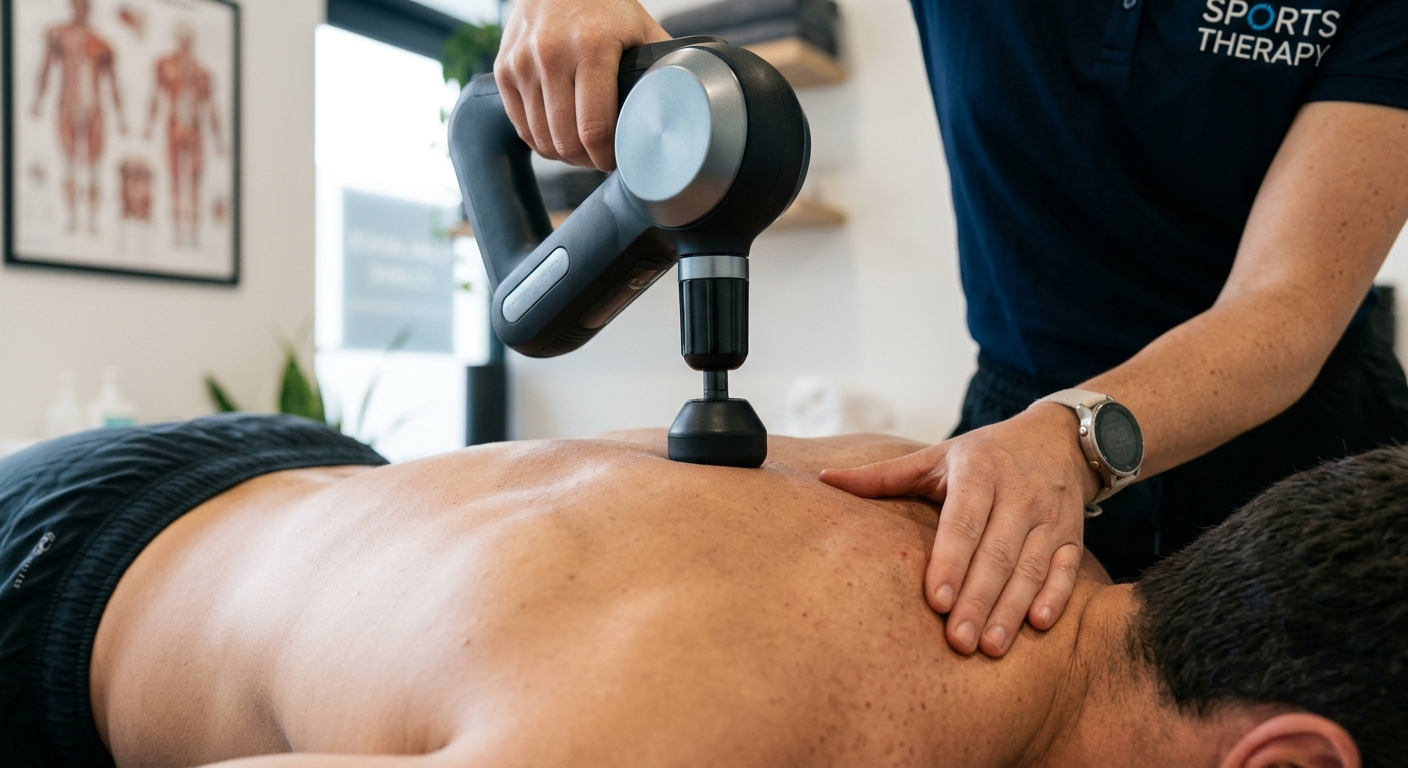
Clinical massage is hands-on soft tissue treatment delivered as part of a physiotherapy assessment and treatment plan, rather than as a stand-alone relaxation service. It's used to reduce muscular tension, improve tissue mobility, and ease pain around a joint or region that's been identified as a problem, guided by what the assessment found rather than a fixed routine.
It draws on many of the same manual techniques as sports or remedial massage, deep tissue work, trigger point release, myofascial techniques, and assisted stretching, but the difference is context. Every technique is chosen because it addresses something specific found during your assessment.
A spa or relaxation massage is generally a full-body treatment aimed at general wellbeing and stress relief, delivered to a broadly similar routine regardless of who's on the table.
Clinical massage is targeted. We might spend the whole session on one shoulder, one calf, or the muscles around a stiff joint, and the pressure, technique, and areas covered are adjusted to what your body actually needs that day. It's also usually paired with movement testing before and after, so we can see whether the treatment has changed how a joint or muscle is working, not just how it feels.
We use clinical massage alongside exercise-based rehab for conditions like muscular neck and back pain, tension headaches linked to neck and shoulder tightness, tendinopathies where surrounding muscles have become protectively tight, and general overuse tightness from training, work posture, or repetitive movement.
It's rarely the whole treatment plan on its own. It's most effective when it's used to create a window of reduced pain and improved movement that we then use to progress your strength and control work, which is what tends to make the improvement stick.
Clinical massage is provided within an Initial Assessment or Follow-Up session by a HCPC-registered physiotherapist, so you'll always get an assessment of what's going on before hands-on treatment starts, even if massage ends up being the main technique used that day. Details on session length and cost are on our pricing page.
If you're mainly after general tightness relief rather than treatment for a specific problem, our sports massage article covers that side of things too, since the two overlap in technique but not always in purpose.
Massage can reduce tension and pain in the short term, but on its own it rarely resolves the underlying cause of a recurring problem, whether that's a movement pattern, a strength deficit, or a load that's simply too high for the tissue to cope with. That's why we'll usually combine it with specific exercise and, where relevant, advice on activity or training changes, rather than offering massage as a repeat-visit fix.
Clinical massage is a genuinely useful tool within physiotherapy, but it works best as part of a plan built around an assessment, not as a substitute for one.
PhysioHub – Empowerment through Evidence-Based Education.
Every body is different. Book a thorough assessment and get advice that is specific to you and your goals.
Book an Appointment