
Plantar fasciitis has a habit of dragging on. Stretches help a bit, new insoles help a bit, and months later that first step out of bed still hurts.
Shockwave therapy is one of the treatments we reach for when heel pain isn't responding to the basics, but it's worth understanding what it actually does before you book a course.
Plantar fasciitis is pain from the plantar fascia, the thick band of tissue running along the sole of the foot from your heel to your toes. It's typically worst with the first few steps in the morning or after sitting for a while, and often eases slightly once you're moving, only to flare again after standing or walking for long periods.
It's usually linked to load the fascia isn't coping with, whether that's a sudden increase in walking or running, prolonged standing, tight calf muscles, or footwear with poor support.
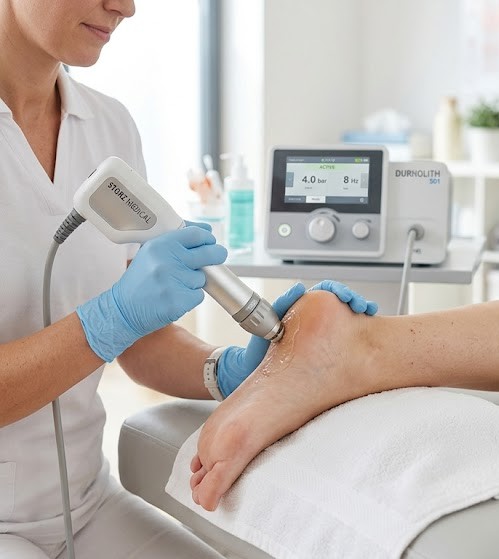
Extracorporeal shockwave therapy (ESWT) delivers focused acoustic pulses through the skin into the affected tissue using a handheld probe. The working theory is that this controlled micro-stress stimulates blood flow and triggers the body's natural healing and tissue-remodelling response in fascia and tendon that hasn't been repairing itself well on its own.
It's a well-established treatment for stubborn, longer-standing plantar fasciitis, typically once symptoms have been present for several months and haven't settled with stretching, load management, and footwear or insole changes.
NICE has reviewed shockwave therapy for refractory plantar fasciitis and concluded that current evidence on its efficacy is adequate to support its use, provided normal arrangements are in place for clinical governance, consent, and audit (NICE Interventional Procedures Guidance IPG311).
It isn't a guaranteed fix for everyone, and results build gradually over several weeks rather than appearing immediately, but for cases that have plateaued on conservative treatment alone, it's a reasonable next step before considering more invasive options.
A shockwave session takes around 20–30 minutes, including a check of your foot and gait beforehand. Most people describe the treatment itself as uncomfortable rather than painful, and it's normal to feel some soreness in the area for a day or so afterwards.
We typically recommend a course of three sessions spaced roughly a week apart, alongside a loading and stretching programme for your calf and plantar fascia, since shockwave works best when it's supporting active rehab rather than replacing it. Between sessions, some patients also find a TENS machine useful for taking the edge off symptoms day to day, though it's a comfort measure alongside the main treatment rather than a substitute for it. See our pricing page for current session and course rates.
For some people, tightness through the calf and the soft tissue around the arch of the foot is part of what's keeping the fascia overloaded. Where that's the case, we may add clinical massage to a shockwave course to help that tissue move more freely between sessions, rather than treating the heel in isolation.
Shockwave isn't suitable for everyone. We wouldn't normally use it during pregnancy, over an area with a suspected fracture, tumour, or infection, if you have a bleeding or clotting disorder or are on strong blood-thinning medication, or if you've had a steroid injection in the treatment area within the last four to six weeks. We'll screen for these during your assessment before starting any course.
Shockwave therapy is a well-evidenced option for plantar fasciitis that hasn't responded to the basics, but it works best as part of a plan that also addresses load, footwear, and calf and foot flexibility, not as a stand-alone fix. If your heel pain has stopped responding to rest and stretching, an assessment is the best place to start.
PhysioHub – Empowerment through Evidence-Based Education.
Every body is different. Book a thorough assessment and get advice that is specific to you and your goals.
Book an Appointment